Skip to content

CORPORATE SUSTAINABILITY

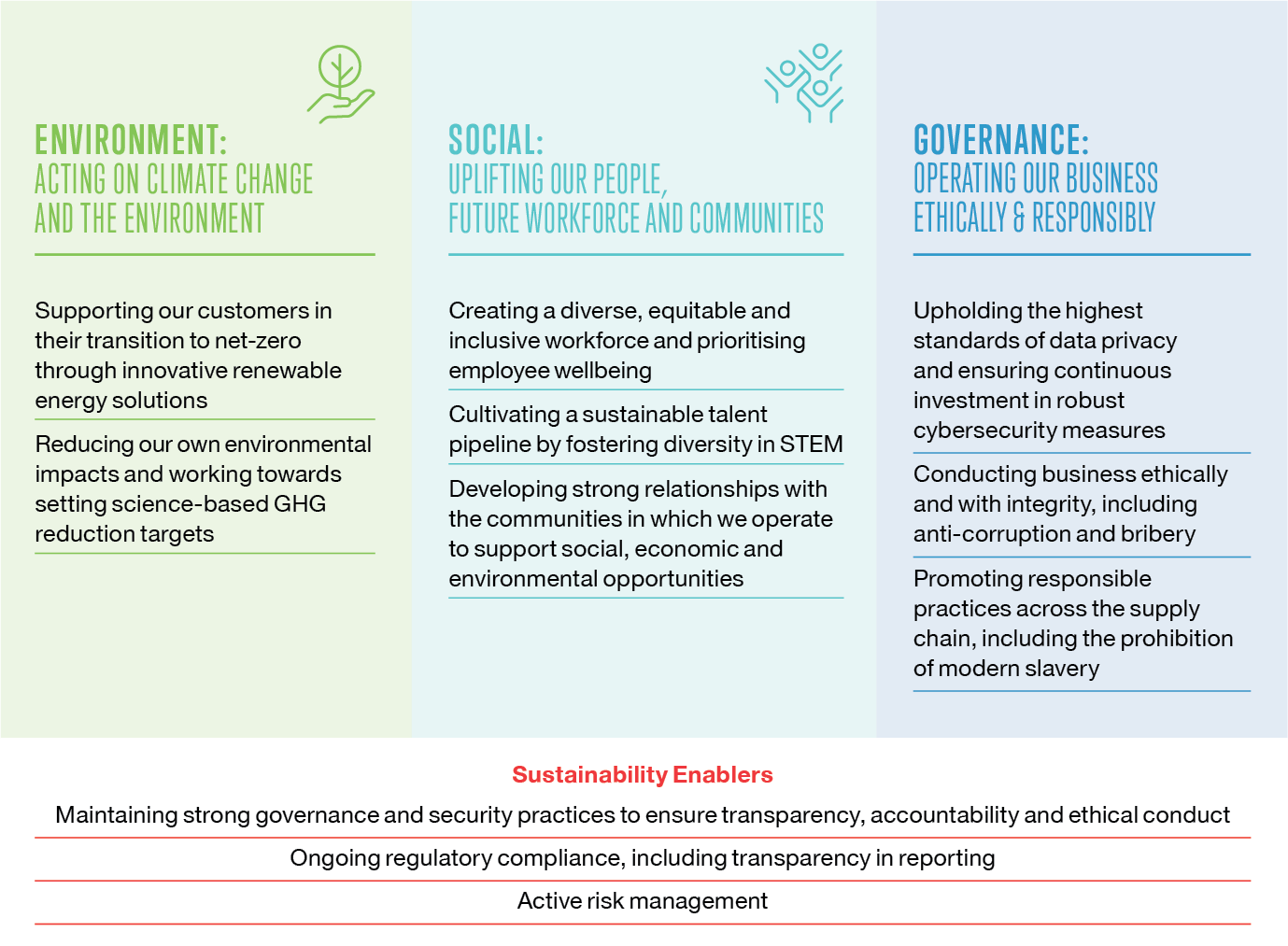
We recognise that today’s business landscape is about more than just profitability. At Hansen, we are dedicated to operating a truly sustainable business.


WHAT SUSTAINABILITY MEANS AT HANSEN

At Hansen, sustainability means integrating; responsible business practices, strong governance, environmental stewardship, and positive social impact.

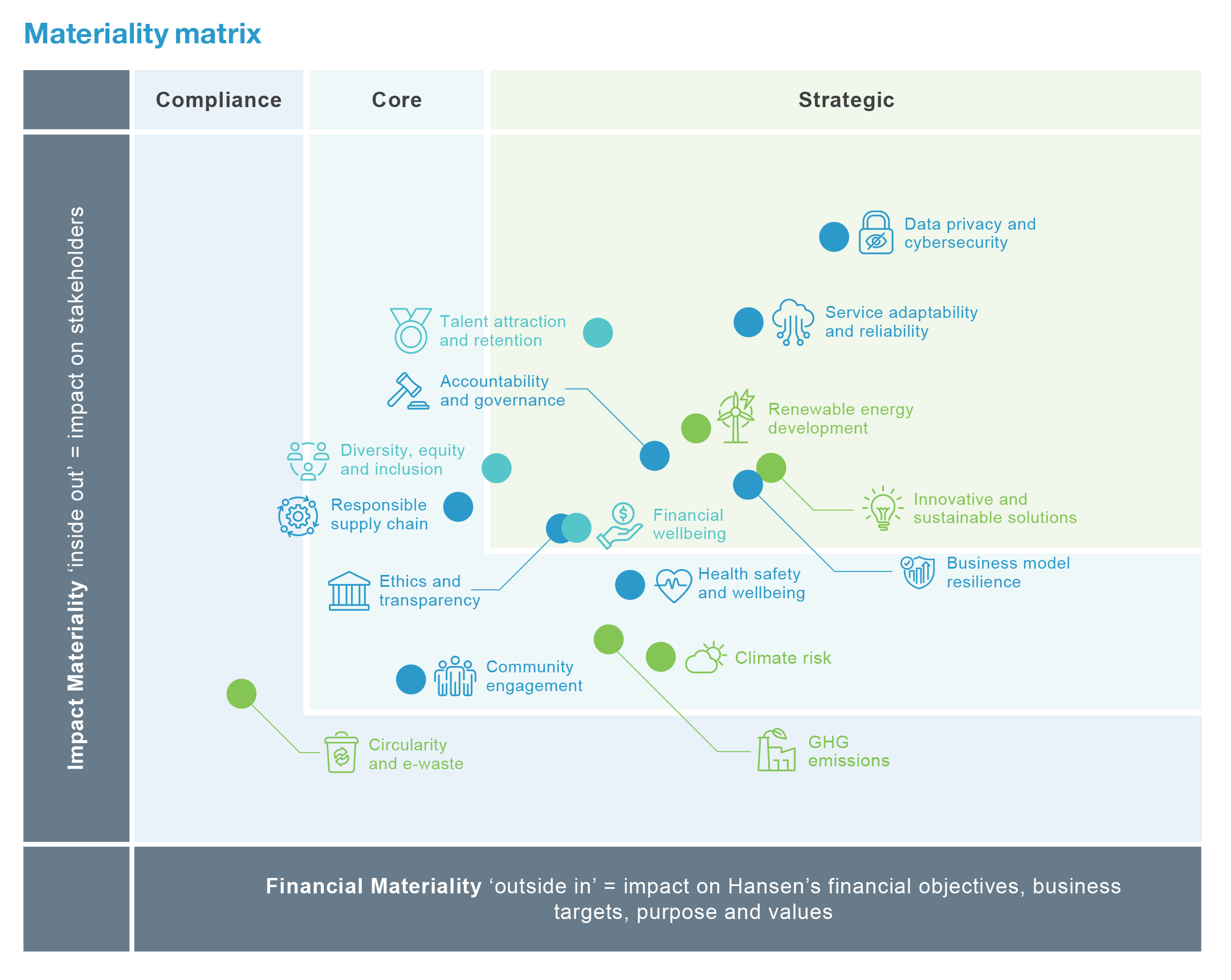
It is through our Sustainability Strategy that we embed sustainability across our business; and we do not do this alone. Our strategy seeks to align our sustainability efforts with the ten principles of the UN Global Compact and a number of the UN Sustainable Development Goals.

Through our Sustainability Strategy and our annual Sustainability Report, we invite our stakeholders to join us on our journey to being a sustainable, market-leading software and services business.

OUR CLIMATE REPORT

We respect the interconnectedness of climate and sustainability issues within our broader operations. Our plan is to undertake regular assessments of our environmental risks and opportunities. This will enable us to continuously improve our ability to adapt to climate-related hazards and natural disasters in all the regions of our operations.

Our Climate Report is embedded in our FY25 Sustainability Report, which provides detailed information about our approach and considers the TCFD framework. It sets the foundation for Australia’s forthcoming mandatory climate-related financial disclosures.

OUR ENVIRONMENT

We embrace a precautionary approach to environmental challenges, actively pursuing initiatives that foster greater environmental responsibility while delivering economic value to our stakeholders. From selecting sustainable buildings and making eco-friendly energy choices to managing waste and e-waste responsibly, our efforts are woven into every aspect of our operations. We also strive to uplift the communities where we live and work.

Our commitment to minimising our environmental impact reaches beyond operations and extends throughout our entire supply chain. As a software company that services the energy and communication sectors, Hansen also plays a pivotal role in supporting the reduction of the carbon footprint of these sectors.

OUR JOURNEY TO NET ZERO

We recognise the collaborative approach that business must make and the transformative change necessary to limit the global temperature rise to 1.5 °C. We are committed to reducing our carbon footprint through sustainable practices and continuous improvement.

At Hansen, we are taking a phased approach on our journey to become net-zero. We are delighted to share that for the third year in a row our Australian operations have been certified as carbon neutral by Climate Active. More importantly, our Australian emissions are declining even as our business is growing. In the next few years, our intention is to measure GHG emissions across the Hansen global operations as we seek to expand our carbon neutral status globally over time.

Click to see our recent Climate Active Public Disclosure Statements – FY24, FY23, FY22, FY21

OUR COMMUNITY

Hansen is fortunate to have a diverse workforce, with a wide range of backgrounds, languages, ages, genders, and more. This diversity creates a vibrant culture where people collaborate, innovate, and contribute positively to the environment and our communities.

We are committed to treating every individual with dignity and respect, with human rights at the core of our workplace culture. Hansen champions all forms of diversity—gender, neurodiversity, belief systems, and ethnicity—embedding it within our strategies, culture, policies, and workplace structures.

To learn more about Life at Hansen, click here

RESPONSIBLE BUSINESS PRACTICES

In a world where trust is currency, we always seek to operate with the highest levels of integrity and transparency.

Our focus on maintaining strong governance and security practices to ensure transparency, accountability and ethical conduct, and a proactive approach to risk management, are key enablers for our overall Sustainability Strategy.

DATA PRIVACY AND CYBERSECURITY

Data privacy and cybersecurity are vital to our business.

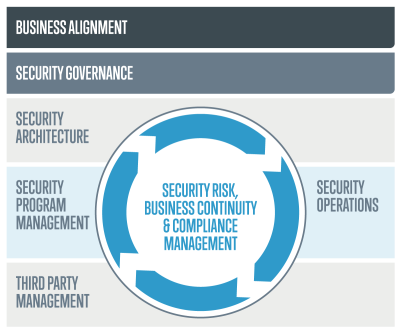
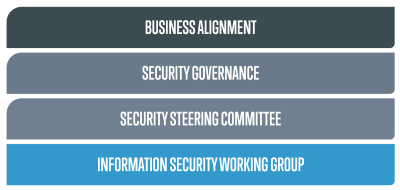
While we work to reduce the risk of cyberattacks, we recognise that not all can be prevented. To help mitigate risks, we have strong IT security governance and incident response protocols to proactively protect data and enhance the resilience of our global operations.

OUR IT SECURITY & GOVERNANCE FRAMEWORK
CONTACT HANSEN

Contact us to learn more about Hansen’s sustainability efforts.

Contact Us

1. What does “modernise with precision” mean for Tier-1 telecom operators?

“Modernise with precision” describes a low-risk, targeted approach to BSS/OSS modernisation where operators upgrade only the parts of their digital stack that create the greatest impact. Instead of embarking on high-risk, multi-year full-stack replacements, Tier-1 telcos selectively introduce cloud-native BSS/OSS, API-driven telecom architecture, AI-ready data layers, and TMF-compliant BSS components.
This modular strategy reduces cost and disruption, allowing operators to strengthen areas such as product agility, order orchestration, customer experience, and operational efficiency while maintaining stability in core environments. It aligns directly with TM Forum’s Open Digital Architecture (ODA), which encourages a composable, interoperable, future-proof approach to telco transformation.

2. Why is time-to-market so important for telecom monetisation today?

Telecom monetisation increasingly depends on the ability to respond quickly to new commercial opportunities – from enterprise IoT solutions and digital services to 5G monetisation, wholesale partnerships, and B2B vertical offerings. In this environment, operators that can design, package, and activate new services in days rather than months gain a clear revenue advantage.
Legacy catalogues, rigid product hierarchies, and tightly coupled BSS architectures make rapid innovation difficult. Modern operators therefore prioritise catalog-driven architecture, agile/composable BSS, and cloud-native BSS capabilities to give business teams control over offer creation without relying on long IT delivery cycles. Faster launch cycles = faster monetisation.


3. What is slowing down product launch cycles for many telcos?

The primary obstacles are deeply entrenched in legacy architecture: hard-coded product models, outdated catalogues, nonstandard integrations, and heavy IT dependencies. These constraints slow down even minor product changes, creating friction between commercial teams and IT.
Modern telcos are replacing these bottlenecks with TMF-compliant BSS, cloud-native catalogues, API-driven BSS integrated via TMF Open APIs, and low/no-code configuration tools. These solutions allow product owners to create and test offers independently, ensuring the Digital BSS backbone supports true agility.

4. How can telecom operators reduce order fallout and manual intervention?

Order fallout typically stems from fragmented systems, inconsistent data models, and brittle custom integrations across BSS/OSS chains. When orchestration spans numerous legacy systems, even small discrepancies can cause orders to fail.
Operators can dramatically reduce fallout rates by adopting zero-touch service orchestration, modern order management modernisation, end-to-end automation, and a unified data model across their Digital OSS and Digital BSS layers. Cloud-native telecom systems and order orchestration for telecom remove reliance on manual rework, minimise delays, and improve service accuracy – all essential to delivering predictable customer experiences.

5. Why is accuracy so important for B2B and wholesale customer experience?

For enterprise and wholesale customers, trust is built on precision. A single misquote, incorrect configuration, or missed activation can lead to delays, SLA breaches, revenue disputes, and strained relationships. These segments rely on highly controlled, predictable fulfilment processes – particularly as operators expand into 5G edge services, network slicing, managed security, and outcome-based contracts.
Improving accuracy requires strengthening the underlying architecture – through modern CPQ for telecom, clean data models, cloud-native BSS/OSS, and robust API-driven telecom architecture. When quoting, ordering, provisioning, and billing are accurate, customer satisfaction increases naturally.

6. How does cloud, AI, and API-driven architecture support telecom modernisation?

Cloud-native platforms provide the scalability, flexibility, and deployment speed needed to support modern telecom services. AI introduces intelligence into operations, enabling predictive analytics, anomaly detection, and proactive assurance. APIs – especially TMF Open APIs – ensure new components integrate cleanly with legacy systems.
Together, AI-powered BSS/OSS, cloud-native architecture, and API-driven integration create a digital foundation that supports continuous innovation, reduces technical debt, and enables operators to deliver new services more efficiently. This trio is central to future-proofing the telco stack.

7. What is TM Forum’s Open Digital Architecture (ODA) and why does it matter?

TM Forum’s Open Digital Architecture (ODA) is an industry-standard framework designed to help telcos simplify, modularise, and modernise their BSS/OSS environments. ODA promotes interoperability, composability, and openness so operators can integrate new capabilities without heavy customisation or vendor lock-in.
For Tier-1 operators, ODA serves as a blueprint for transitioning from monolithic legacy stacks to cloud-native, API-driven, modular BSS/OSS infrastructure. By adopting ODA-aligned solutions, operators speed up integration, lower deployment risk, and reduce long-term operational cost.

8. How is Hansen involved in TM Forum and ODA?

Hansen aligns its architecture directly to TM Forum’s ODA principles and has contributed to the development of one of TM Forum’s recognised industry standards. This reinforces a commitment not just to following best practices, but to shaping them.
Hansen’s portfolio of cloud-native, AI-powered, API-driven Digital BSS/OSS modules is built on TMF Open APIs and composable design principles. This ensures seamless interoperability in multivendor environments and helps operators modernise safely and incrementally.

9. Can operators modernise their BSS/OSS without a full-stack replacement?

Yes – and in fact, most Tier-1 operators now prefer incremental transformation. Full-stack replacement is high risk, slow, and expensive. By contrast, modular modernisation allows operators to introduce new BSS/OSS capabilities – catalogues, orchestration layers, charging engines, customer management, monetisation components – without destabilising the existing ecosystem.
This approach reduces risk, accelerates value, and aligns with ODA’s principles of composability and openness. Operators can modernise at their own pace while still maintaining service continuity.

10. How does modular modernisation reduce risk?

Modular transformation focuses on improving specific parts of the architecture – such as product agility, order accuracy, unified data, or 5G monetisation – without changing everything at once. Each module is integrated, tested, and scaled independently, which reduces disruption and improves predictability.
It also allows operators to retire legacy systems gradually, reducing technical debt over time while still realising near-term efficiency and revenue gains. This is why agile/composable BSS is now the preferred model for Tier-1 telecom transformation.

11. What operational improvements can telcos expect from a unified data model?

A unified, AI-ready data model brings real-time visibility across commercial and operational processes, enabling faster decision-making and more reliable service execution. It also allows operators to detect issues earlier, automate root cause analysis, and reduce order fallout.
This consistent data foundation is essential for AI-powered BSS/OSS, predictive assurance, next-best-action recommendations, and advanced analytics. It ultimately improves operational efficiency, accuracy, and customer experience – three core pillars of modern telecom performance.

12. Why is Customer Experience (CX) tightly linked to operational excellence?

Most customer experience problems – delays, incorrect orders, billing errors, missed SLAs – originate from inefficiencies within the internal BSS/OSS engine. When operators modernise their Digital BSS/OSS processes, eliminate manual workarounds, and ensure accurate orchestration and service activation, the customer experience improves naturally.
This is particularly true for enterprise and wholesale customers, where CX is defined by precision, predictability, and contract performance. Improving CX requires improving the processes beneath it.

13. How do Hansen’s solutions fit into a Tier-1 telco transformation strategy?

Hansen provides cloud-native, API-driven, TMF-compliant, AI-powered Digital BSS/OSS modules that integrate smoothly into hybrid and legacy environments. Operators can use them to strengthen catalog agility, automate order flows, unify data, enhance monetisation, or improve service reliability – without needing to replace their entire BSS/OSS stack.
This flexibility supports transformation at the operator’s own pace, aligned to business priorities, regulatory requirements, and commercial objectives.

14. What benefits can operators expect from a layered or hybrid modernisation approach?

A layered or hybrid approach allows operators to combine existing systems with cloud-native components, enabling transformation without disruption. Key benefits include:
• Faster time-to-market for new offers
• Improved order accuracy and reduced fallout
• Lower cost-to-serve through automation
• Stronger customer experience
• Gradual reduction of technical debt
• Alignment with ODA and modular architecture principles
This approach balances stability with innovation – ideal for Tier-1 operators.

15. How do industry standards such as ODA accelerate telecom digital transformation?

Industry standards like TM Forum ODA and TMF Open APIs reduce integration complexity, promote interoperability, and give operators a trusted blueprint for modernisation. They ensure that new BSS/OSS components can plug into existing environments without custom engineering.
By reducing dependence on bespoke integrations and enabling modular deployment, standards significantly lower long-term cost and accelerate transformation across the business. They also future proof the architecture for new technologies, including AI, automation, and 5G service innovation.


Lorem ipsum dolor sit amet, consectetur adipiscing elit. Phasellus vestibulum ut neque eu cursus. Donec eu lectus dictum, convallis lectus eget, porta lorem. Aliquam at lacus rutrum est viverra sollicitudin id eu diam. Sed magna diam, porttitor sed justo a, sodales convallis massa. Nam scelerisque diam in justo pharetra aliquam.