
AWWA ACE (American Water Works Association’s Annual Conference and Exposition) reinforced for me that the future of water utilities will be shaped by people as much as technology. AI, automation, advanced metering infrastructure, modern customer information systems, and better data all matter, but their real value lies in helping utilities deliver safe, reliable, affordable water while building public trust and supporting the communities they serve.
Water utilities are leading with purpose, not just technology
 When people think about water utilities, they often think about pipes, pumps, treatment plants, and infrastructure.
After attending AWWA ACE, I left thinking about something entirely different.
I left thinking about the people.
Throughout the conference, I had the opportunity to speak with utility executives, operations leaders, engineers, customer service professionals, and IT leaders from across North America. While every utility faces its own unique challenges, one thing became abundantly clear: this industry is filled with people who care deeply about serving their communities.
Yes, technology was everywhere.
Digital transformation is helping water utilities act faster
Utilities are deploying advanced metering infrastructure and modern data platforms to better understand water usage and promote conservation. They’re using analytics to detect service line leaks and water main breaks before they become larger, more costly problems. They’re modernizing customer information systems to improve billing accuracy and create better experiences for customers.
Water quality remains a top priority as well. Leaders shared how they’re addressing emerging contaminants such as PFAS, strengthening treatment processes, and preparing for evolving regulations, all while maintaining public trust in one of the most essential services any community depends on.
Artificial intelligence was another recurring topic throughout the conference.
AI in water utilities is becoming practical, not theoretical
What struck me, however, was that the conversation wasn’t driven by hype. Utility leaders weren’t asking how they could use AI simply because it’s the latest trend. They were asking practical questions.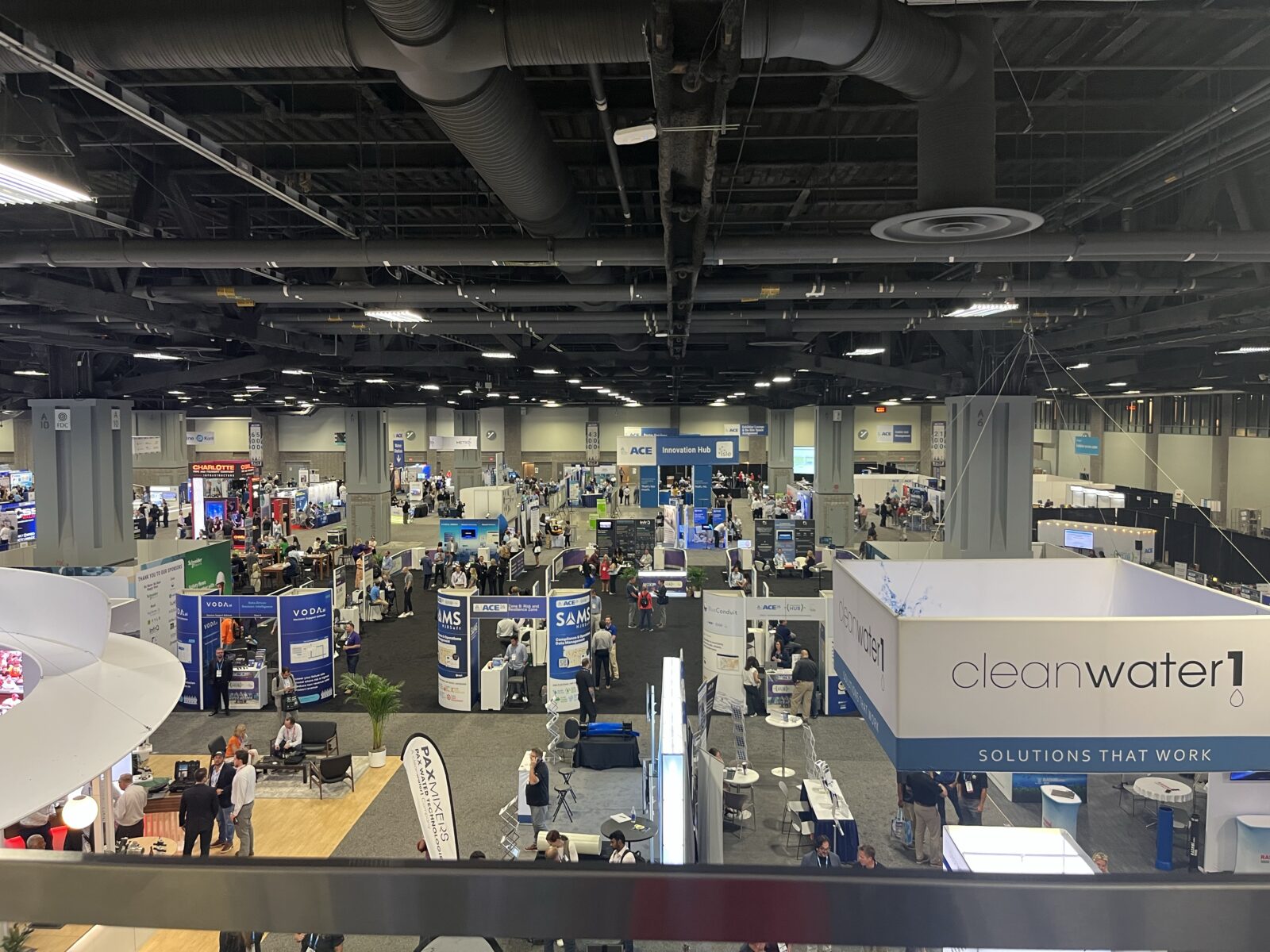
How can AI help dispatch field crews faster?
How can it identify leaks sooner?
How can it optimize fleet operations?
How can it reduce administrative work so employees can focus on higher-value tasks?
How can it improve customer service while preserving the human touch?
The goal wasn’t replacing people.
It was empowering them.
Collaboration is accelerating water utility innovation
I was equally impressed by the organizations that are earlier in their digital transformation journey. Rather than pretending to have all the answers, they came to AWWA ACE to learn. They attended educational sessions, exchanged ideas with peers, and openly discussed both successes and challenges.
That willingness to collaborate is something special about the water industry.
Utilities don’t compete the way many private-sector organizations do. They share knowledge because every lesson learned ultimately benefits another community somewhere else.
But perhaps the biggest takeaway for me had nothing to do with technology.
It was humility.
Many of the people I met are responsible for delivering clean drinking water to hundreds of thousands, and in some cases millions, of people every day. That’s an incredible responsibility.
Yet very few were interested in recognition.
They weren’t trying to be in the spotlight.
Their focus was simple: deliver safe, reliable, affordable water while being responsible stewards of both public resources and the environment.
Conservation, affordability, and equity remain connected
Some of my favorite conversations centered on conservation, affordability, and equity.
One discussion in particular has stayed with me.
Several utility leaders spoke candidly about the challenge of encouraging conservation while ensuring water remains affordable for everyone. Raising rates may reduce consumption for some customers, but it can also disproportionately impact families who are already struggling to pay their bills. Meanwhile, larger commercial users or wealthier households may simply absorb the additional cost without significantly changing their usage.
There are no easy answers.
But I appreciated that these leaders weren’t avoiding difficult conversations. They recognized that managing water isn’t just about infrastructure or economics, it’s also about fairness, accessibility, and serving every member of the community.
That perspective reminded me that utilities don’t simply deliver water.
They deliver public trust.
The future of water depends on trust, collaboration, and people
As I reflect on my time at AWWA ACE, I’m more optimistic than ever about where this industry is headed.
Not because technology is advancing, although it certainly is.
Not because AI is becoming more capable, although it will continue to reshape utility operations.
I’m optimistic because of the people leading this transformation.
People who are willing to learn from one another.
People who embrace innovation with purpose.
People who remain humble despite the enormous responsibility they carry.
And people who wake up every day committed to protecting one of our world’s most precious resources.
Technology isn’t the mission.
It’s the enabler.
Technology is the enabler, not the mission
Automation, artificial intelligence, modern customer information systems, cloud-native meter data management, self-service solutions, and advanced analytics all have the power to help utilities operate more efficiently, respond faster, improve customer experiences, and make more informed decisions. Ultimately, these technologies free utility teams to focus on what matters most: delivering safe, reliable, affordable water while preparing for the challenges of tomorrow.
If your utility is exploring its next step in digital transformation, Hansen Technologies is proud to partner with utilities across North America to modernize operations, improve customer engagement, and unlock the full value of data through innovative software, automation, and AI solutions.
Learn more about how we’re helping utilities build the future of water at HansenCX.com.
FAQ
What is AWWA ACE?
AWWA ACE is the American Water Works Association’s Annual Conference and Exposition, a major event for water professionals focused on utility operations, infrastructure, innovation, regulation, and the future of water services.
How are water utilities using AI?
Water utilities are using AI in practical ways, including identifying leaks sooner, dispatching field crews faster, optimizing fleet operations, reducing administrative work, and improving customer service while keeping people at the center of decision-making.
Why is digital transformation important for water utilities?
Digital transformation helps water utilities operate more efficiently, improve billing accuracy, understand water usage, detect issues earlier, strengthen customer engagement, and make more informed decisions using better data.
How can utilities balance water conservation and affordability?
Utilities can balance conservation and affordability by using better data, thoughtful rate design, targeted customer programs, and community engagement to encourage responsible water use without placing unfair pressure on households already struggling with cost of living pressures.
What role does technology play in building public trust?
Technology helps utilities build public trust by improving reliability, transparency, responsiveness, and customer experience. But as I heard throughout AWWA ACE, technology is only valuable when it helps people deliver safer, more reliable, and more affordable water services.